Mon - Fri 10am - 10pm
Sat- Sun 10am - 7pm
hello@nightwatchuc.com
2118 Pleasant Valley Road Winchester, VA 22601
(540) 545-9999


blog spot
The
Health hub
A collection of helpful articles & information to spread awareness through education from our staff to you

Fall sports tryouts feel far away in June. They are not. And every year, the same thing happens. Parents wait until the last week of August to schedule a sports physical, only to find that every pediatrician in Northern Virginia is booked solid and every urgent care has a line out the door.
We want to help you avoid that this year.
What Is a Sports Physical?
A sports physical, sometimes called a pre-participation physical evaluation, is a comprehensive examination designed to make sure your child is healthy and ready to safely participate in organized sports.
It is required by most schools, camps, and athletic leagues across Virginia before a child can join a team, attend tryouts, or step onto the field for the season.
At Night Watch, our sports physicals are built around one goal: confirming your child is ready, without the wait or the runaround that comes with scheduling through a typical pediatrician’s office.
Why Timing Matters
Most schools and athletic programs require a sports physical to be completed within a certain window before the season starts, often anywhere from a few months to a year, depending on the sport and the district.
The problem is that everyone tends to wait until the same time. Late summer becomes a bottleneck. Pediatrician offices get backed up. Forms do not get signed in time. Kids miss the first few days of practice, or worse, get held out of tryouts altogether.
Coming in during June or July, while the season feels far off, means you get seen quickly and walk out with the form completed, no stress, no scrambling.
What Happens During the Visit
When you walk in for a sports physical at Night Watch, our provider will review your child’s medical history, including any past injuries, surgeries, or family health conditions that could be relevant to athletic participation.
From there, the physical exam typically includes a general health assessment to make sure your child is cleared for the physical demands of their sport.
Our goal is to be thorough without making the visit feel like a hurdle. We want your child walking out the door cleared and confident, not anxious about whether they passed some kind of test.
No Appointment Needed
This is one of the biggest differences between Night Watch and a traditional pediatrician’s office. You do not need to schedule weeks in advance. You do not need to take a half day off work for an 11am slot that was the only one available.
Walk in any day at any of our three Northern Virginia locations. We will get your child seen, evaluated, and on their way with a completed form, same visit.
Whether It Is For
| A fall sports try out A summer camp that requires a physical before drop-off A travel team with a registration deadline Any organized activity that asks for medical clearance before participation |
If your child needs the form filled out, we can help.
Why Families Choose Night Watch for This
We know plenty of families in Northern Virginia who have a long-standing relationship with their pediatrician and prefer to handle physicals there when there is time to plan ahead. We respect that completely.
But for families who are short on time, dealing with a tight deadline, or just need it done without the back-and-forth of scheduling, Night Watch is built for exactly that moment. Extended hours, walk-in access, and a team that treats your child like one of our own.
Do Not Wait Until the Rush
Here is our honest advice. If your child plays a fall sport, needs a camp physical, or is joining a new team this year, come in now while the season still feels far away. You will thank yourself in August when everyone else is scrambling and your form is already done.
Walk in any day. No appointment needed. We are open late every weekday and every weekend across all three Northern Virginia locations.
CATEGORY
6/18/2026
POSTED
May is Urgent Care Awareness Month, a time to recognize the critical role urgent care plays in keeping communities healthy, and to help families understand when and how to use it.
For families across Northern Virginia, Night Watch Urgent Care has been that resource since 2019. Not a corporate chain. Not a crowded ER. Just a locally owned team of experienced providers who show up every day, including evenings and weekends, for the moments that cannot wait.
This month we want to share why so many families in Loudoun County, Manassas, and Winchester have made Night Watch their first call when something comes up.
What Urgent Care Awareness Month Is All About
Urgent Care Awareness Month was created to educate communities about the important role urgent care centers play in the healthcare system.
Urgent care fills the gap between a primary care office and an emergency room. It is designed for conditions that need same-day attention but are not life threatening. Conditions that cannot wait for a Monday morning appointment, but also do not need a four-hour ER visit.
The goal of Urgent Care Awareness Month is simple: help people make better, faster healthcare decisions so they get the right care in the right place at the right time.
And in Northern Virginia, Night Watch is that place for thousands of families every year.
Why Northern Virginia Families Choose Night Watch
Locally Owned and Operated
Night Watch was not built by a corporation. It was built by a board-certified pediatrician and local entrepreneur who saw a real need in the community and decided to do something about it.
That matters. When you walk through our doors, you are not a number in a system. You are a neighbor. Our providers know their patients, treat families like their own, and have built a practice grounded in genuine care.
No corporate phone trees. No impersonal systems. Just a team that is invested in the health of this community.
Open When Your Pediatrician Is Not
Kids get sick at 8pm on a Friday. Fevers spike at midnight. Injuries happen on Sunday afternoons.
Night Watch is open Monday through Friday until 10pm and every weekend from 10am to 7pm. That means when your child comes home from school feeling off, or your toddler wakes up at 9pm with ear pain, you have somewhere to go tonight.
You do not have to wait. You do not have to guess. You can walk in.
Same Urgent Care for Kids and Adults
Night Watch treats the whole family. Whether it is a sick child, an adult with a UTI, a sports injury in a teenager, or STI testing for an adult, our team handles it all under one roof.
At our Aldie location, we also offer care for adolescents and young adults up to 26 years of age, including sexual health services, STI testing, and emotional wellness visits.
On-Site Testing and Treatment No Extra Trips
One of the biggest frustrations with healthcare is being sent somewhere else. Night Watch is built to handle as much as possible in a single visit.
We have on-site X-ray at all three locations, on-site lab testing for strep, flu, COVID, RSV, UTIs, STIs, and more, IV hydration therapy, nebulizer treatment for breathing concerns, and same-day prescriptions. You come in with a problem and leave with a plan.
What Night Watch Can Treat
During Urgent Care Awareness Month, we want every family in Northern Virginia to know what urgent care can actually do. Here is a full picture of what our team handles every day.
Illness Treatment
- Fever evaluation and management
- Ear pain and ear infections
- Strep throat and sore throat with rapid testing on site
- Stomach bugs, vomiting, and nausea
- Respiratory illness including flu, COVID, and RSV
- Sinus infections and congestion
- Allergies and allergic reactions
- Tick bites and Lyme disease evaluation
- UTI diagnosis and treatment
Injury Care
- Cuts and lacerations
- Burns
- Sprains and fractures with on-site X-ray
- Foreign body removal
- Sports injuries
- Scooter and bike injuries
- Concussion evaluation
Diagnostic and On-Site Services
- On-site lab testing for strep, flu, COVID, RSV, UTIs, STIs, and more
- X-ray at all three locations
- IV hydration therapy
- Nebulizer treatment for asthma and breathing flare-ups
- Same-day prescriptions
Additional Services
- Telemedicine visits for when you cannot make it in person
- Physical exams and sports physicals
- STI and STD testing at our Aldie location
- Emotional wellness visits
- Care for adolescents and young adults up to 26 years of age at our Winchester clinic
When to Come to Night Watch Instead of the ER
One of the most common questions we hear is: should I go to the ER or urgent care?
Here is the simple answer.
Go to the ER for: Life-threatening emergencies. Trouble breathing or lips turning blue. Uncontrolled bleeding. Seizures or loss of consciousness. Severe allergic reactions with throat swelling. High fever in a baby under 3 months. Anything that cannot wait even one minute.
Come to Night Watch for: Everything in between. Urgent but not life threatening. Fever, ear infections, strep, injuries, stomach bugs, rashes, tick bites, breathing flare-ups, UTIs, and more. We can handle the in-between moments faster, more affordably, and with less stress than an ER visit.
And if your child needs a higher level of care, we will always tell you and help guide next steps.
Three Locations Across Northern Virginia
Night Watch Urgent Care serves families across Loudoun County, Prince William County, and the Winchester area with three convenient locations.
Aldie / Stone Ridge 42010 Village Center Plaza, Suite 100, Aldie, VA 20105 | (703) 775-4999
Manassas 11700 Sudley Manor Dr, Manassas, VA 20109 | (703) 589-9695
Winchester 2118 Pleasant Valley Road, Winchester, VA 22601 | (540) 545-9999
All three locations are open Monday through Friday 10am to 10pm and Saturday through Sunday 10am to 7pm. Walk-ins always welcome. No appointment needed.
This Month and Every Month
Urgent Care Awareness Month is a reminder that there is a better option between waiting for a Monday appointment and sitting in an ER for four hours.
Night Watch Urgent Care has been that option for Northern Virginia families since 2019. And we are not going anywhere.
If your family has not visited us yet, we hope you will. And if you are already a Night Watch family, thank you for trusting us with your care.
We are here. Every evening. Every weekend. For every in-between moment.
CATEGORY
5/28/2026
POSTED
Seasonal allergies are one of the most common conditions we see in children — especially this time of year.
Across our clinics in Aldie (Stone Ridge), Manassas, and Winchester, we’re seeing more kids come in with congestion, sneezing, itchy eyes, and symptoms that seem to linger longer than expected.
For many families, it can feel confusing. Symptoms come and go, don’t fully resolve, and often look like a cold.To help you better understand what’s going on, here are five things many parents don’t realize about kids’ seasonal allergies.
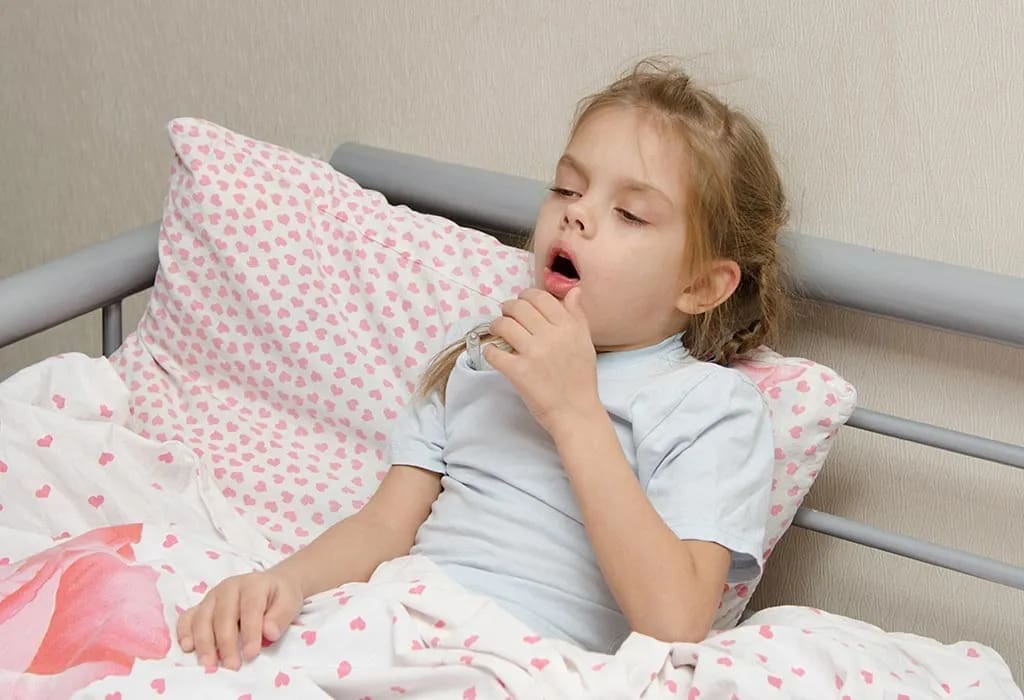
1. Allergies can trigger asthma flare-ups
If your child has asthma, there’s a strong chance that allergies are playing a role.
In fact, many children with asthma also have environmental allergies that can trigger symptoms like coughing, wheezing, and shortness of breath. This is especially common during seasonal changes when pollen levels are higher.
That’s why breathing symptoms may seem worse when allergy symptoms are also present — and why early management matters.
2. Waiting for symptoms to start can make them harder to control
Many allergy treatments are designed to prevent symptoms, not just treat them after they begin.
If your child tends to have seasonal allergies every year, starting treatment early — before symptoms peak — can help reduce how severe they become.
This is something many parents don’t realize until symptoms are already in full swing.
3. Not all home remedies work the way you think
You may have heard that local honey can help with allergies.
While honey is safe for children over 1 year old and can soothe a cough, there’s no consistent evidence that it prevents or treats seasonal allergies.
It’s fine to use as a comfort measure — just not as a primary solution for allergy symptoms.
4. Pollen counts don’t tell the whole story
Checking the pollen count can be helpful, but it doesn’t always explain your child’s symptoms.
Different children react to different types of pollen — like tree, grass, or weed pollen — and most reports only show a general overall level.
That’s why some kids may have significant symptoms even when the pollen count doesn’t seem especially high.
5. There are more treatment options than you might think
For some children — especially those with persistent or more severe symptoms — there are additional options beyond basic allergy medications.
These may include targeted treatments or allergy-specific therapies, depending on your child’s age, symptoms, and triggers.
The right approach varies for each child, which is why getting the right evaluation can make a difference.
What this means for parents
If your child’s symptoms are lingering, worsening, or not responding the way you expected, you’re not alone.
We’re seeing a lot of this right now.
Sometimes it’s straightforward seasonal allergies. Other times, symptoms may overlap with other conditions.
Either way, getting clarity can help guide the right next steps and help your child feel better sooner.
Allergy care at Night Watch Urgent Care
At Night Watch Urgent Care, we evaluate and treat seasonal allergies and related symptoms in children across Northern Virginia.
We help determine what’s causing your child’s symptoms and recommend the next steps — whether that’s supportive care, symptom management, or further evaluation.
We’re open every day, including evenings and weekends, so you don’t have to wait while symptoms linger.
Seasonal allergies can be frustrating — especially when symptoms don’t go away as expected.
If you’re unsure what’s normal or what to do next, it’s always okay to have your child evaluated.
CATEGORY
5/01/2026
POSTED
A quick update from our clinics
Allergies are everywhere right now.
Over the past week, we’ve been seeing a steady flow of kids coming into our clinics in Aldie (Stone Ridge), Manassas, and Winchester with the same pattern of symptoms.
It’s not the typical “gets better in a few days” kind of illness.
It lingers.
And that’s what’s making it confusing for a lot of families.
What we’re seeing in clinic
Most kids we’re seeing right now are coming in with:
- Congestion that won’t go away
- Frequent sneezing
- Runny nose that keeps coming back
- Itchy or watery eyes
- Red, irritated eyes (often mistaken for pink eye)
- A cough that’s worse at night
For many parents, it starts off feeling like a simple cold. But after a few days, it doesn’t improve the way they expected.
Instead of getting better, symptoms just stay — or fluctuate throughout the day.
That’s been one of the biggest patterns we’re seeing.
Why symptoms are worse right now
This is very typical for this time of year in Northern Virginia.
Pollen levels are rising, the weather keeps shifting, and allergens are more active — especially outdoors.
Even children who don’t usually have strong allergies can start showing symptoms when exposure increases.
And because allergy symptoms can overlap with colds, it’s easy to misread what’s going on.
When it’s more likely allergies
There’s no single symptom that confirms it, but there are a few patterns we’re seeing consistently right now.
Symptoms that linger beyond a few days, come and go, or seem worse in the morning or after being outside are often allergy-related.
Itching is another big clue — especially itchy eyes, nose, or throat — which isn’t as common with viral illnesses.
Most of the time, the discharge is also clear rather than thick, and kids may seem uncomfortable but otherwise okay.
What to do next
Not every case needs immediate treatment, but getting clarity can help a lot.
If your child’s symptoms aren’t improving, are affecting sleep, or just don’t feel typical for them, it’s reasonable to have them evaluated.
Sometimes it’s simply confirming that it’s allergies and guiding you on what will help. Other times, it helps rule out something else.
Either way, it takes the guesswork out of it.
Allergy care at Night Watch Urgent Care
At Night Watch Urgent Care, we’re seeing and treating seasonal allergies in children every day right now.
We help families understand what’s causing their child’s symptoms and recommend the right next steps — whether that’s supportive care, allergy management, or further evaluation.
We’re open every day, including evenings and weekends, so you don’t have to wait while symptoms linger.
CATEGORY
4/19/2026
POSTED
Respiratory symptoms in children are becoming more common across the United States, especially during seasonal transitions. Many healthcare providers are reporting an increase in cough, wheezing, and asthma flare-ups in children, often triggered by a mix of viruses, allergies, and weather changes.
We’re seeing the same pattern locally at Night Watch Urgent Care in Stone Ridge (Aldie), Manassas, and Winchester, where more families are coming in with concerns about their child’s breathing.
For many children, symptoms begin mild — a simple cough or slight fatigue — but can progress quickly if not monitored closely.
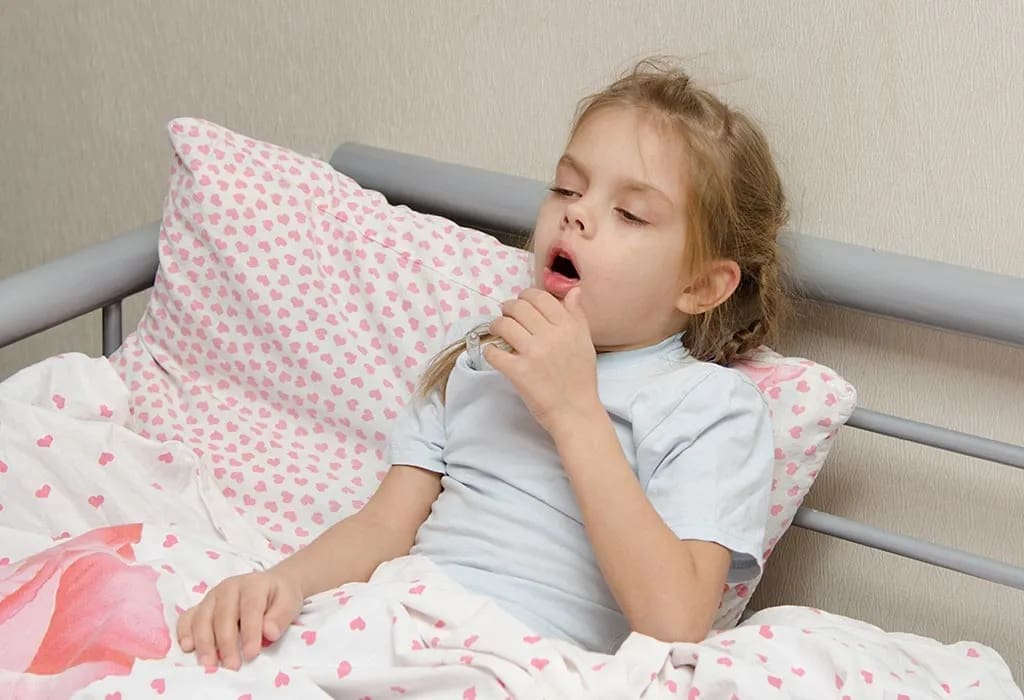
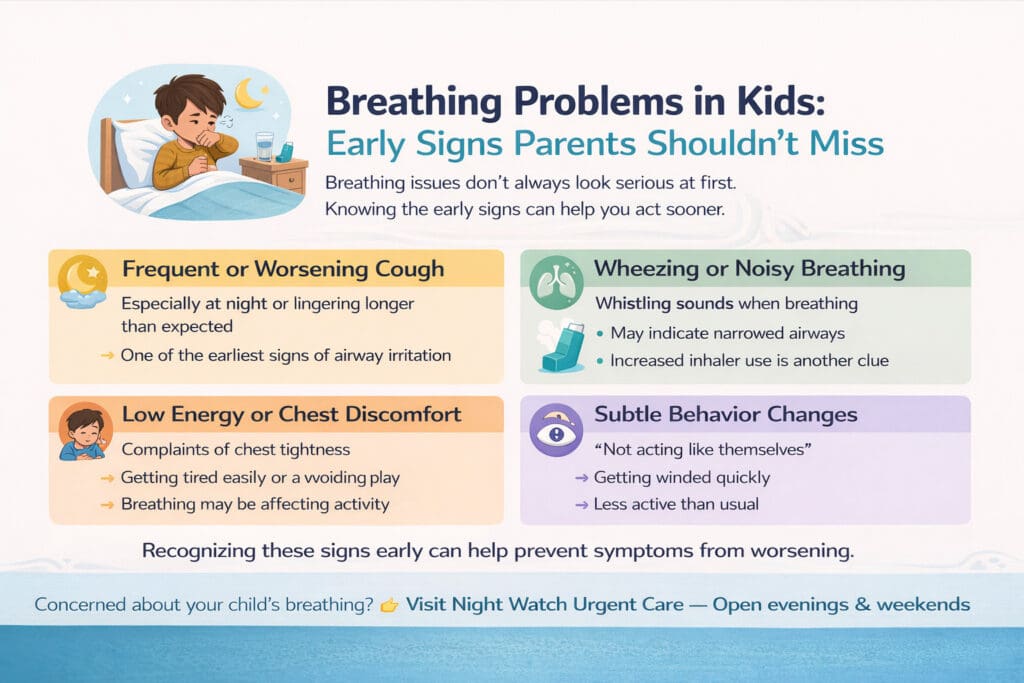
Common Breathing Symptoms in Kids
Breathing problems in children don’t always look severe at first, which can make it difficult for parents to know when to be concerned.
A frequent or worsening cough, especially at night, is often one of the earliest signs. Some children may start needing their inhaler more often than usual, while others develop a wheezing or whistling sound when breathing, which can indicate narrowed airways.
In other cases, children may complain of chest tightness or appear more tired than usual. Subtle changes — like avoiding play, getting winded easily, or simply “not acting like themselves” — can be early indicators that their breathing is affected.
Recognizing these signs early can help prevent symptoms from worsening.
When to Bring Your Child to Urgent Care
If your child’s symptoms are not improving with home care or their usual medications, it may be time to have them evaluated.
At Night Watch Urgent Care, we regularly treat children with asthma flare-ups, persistent cough, and breathing difficulties who benefit from same-day care. Early evaluation allows providers to assess your child’s breathing, adjust treatment if needed, and help prevent symptoms from escalating.
Seeking care sooner rather than later can reduce the likelihood of needing emergency treatment.
When Breathing Symptoms Become Urgent
Some symptoms require immediate medical attention and should not be delayed.
If your child is breathing rapidly, struggling to catch their breath, using extra muscles to breathe (such as ribs pulling in or nostrils flaring), or having difficulty speaking, they should be taken to the emergency room right away.
Other warning signs include bluish lips or face, extreme fatigue, or unusual drowsiness. These may indicate serious respiratory distress and require urgent care.
Pediatric Urgent Care for Breathing Issues in Northern Virginia
At Night Watch Urgent Care, we provide evaluation and treatment for asthma flare-ups, wheezing, and respiratory symptoms in children across Northern Virginia.
Our clinics offer:
- Same-day urgent care visits
- Breathing treatments, including nebulizer therapy
- On-site evaluation and monitoring
We’re open every day, including evenings and weekends, so families can access care when symptoms start — not hours later.
CATEGORY
3/30/2026
POSTED
6 Things Night Watch Urgent Care Does Differently
When your child gets sick or injured, one of the hardest decisions parents face is where to go. Should you wait for your pediatrician? Head to the emergency room? Or look for an urgent care that actually understands pediatric needs?
At Night Watch Urgent Care, we’ve built our clinics around what families truly need: convenience, clarity, and care that fits real life.
Here are six ways we do things differently.
1. Pediatric Urgent Care Designed for Real Life
We are not just an urgent care clinic — we are a pediatric-focused environment designed to make children feel comfortable and supported.
From common illnesses like fevers and coughs to injuries that happen during play or sports, our approach centers on both medical care and the overall experience for families.
2. Open Late and on Weekends
Illness doesn’t follow office hours, and neither do we.
⏰ Hours:
Monday–Friday: 10 AM – 10 PM
Saturday–Sunday: 10 AM – 7 PM
Whether symptoms start after school or worsen at night, families have access to care when they actually need it.
3. We Treat More Than You Might Expect
Many parents are surprised by the range of conditions we manage.
We regularly treat:
• Flu symptoms and respiratory illnesses
• Ear infections and sore throats
• Minor fractures, sprains, and sports injuries
• Cuts that require stitches
• Rashes and allergic reactions
• Dehydration and stomach illnesses
This means fewer referrals and fewer stops for care.
4. On-Site X-Rays and Testing
One of the biggest advantages of visiting Night Watch Urgent Care is access to immediate diagnostics.
With on-site X-rays and testing, we can:
• Confirm fractures
• Evaluate injuries
• Diagnose infections
• Provide same-visit treatment plans
Families don’t have to wait days for answers or travel to multiple locations.
5. Helping Families Avoid Unnecessary ER Visits
Emergency rooms are essential for serious, life-threatening conditions — but many situations fall into a gray area.
When it’s urgent but not an emergency, urgent care is often the right choice.
At Night Watch, we provide timely evaluation and treatment so families can avoid long ER wait times and higher costs when appropriate.
6. Care for Both Kids and Adults at Stone Ridge
📍 Stone Ridge Location
In addition to pediatric care, this location also treats adults.
This makes it easier for families to receive care together, especially when multiple members are feeling unwell or need evaluation at the same time.
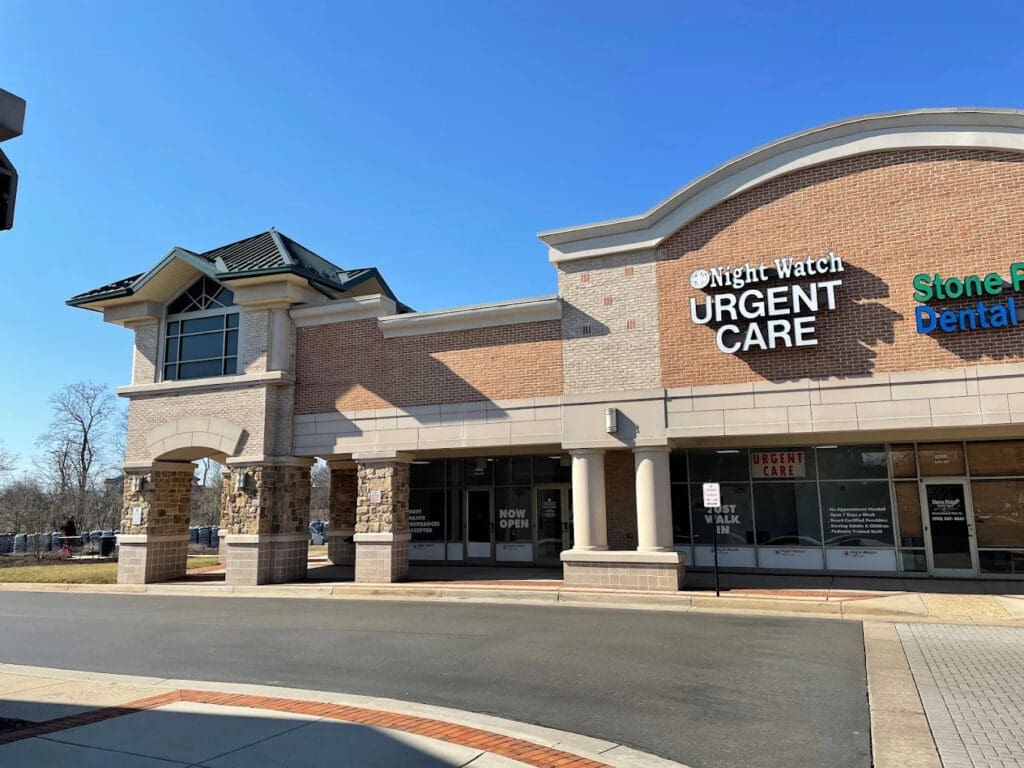
Convenient Care Across Northern Virginia
Night Watch Urgent Care serves families across:
• Manassas
• Winchester
• Aldie / Stone Ridge
With extended hours, comprehensive services, and a family-centered approach, we are here when care can’t wait.
When to Visit Night Watch Urgent Care
If your child is sick, injured, or something simply doesn’t feel right, it’s always okay to seek care.
Having access to a trusted urgent care can make these moments less stressful and more manageable.
We are open late and available on weekends to support your family’s needs.
Care should be accessible, efficient, and built around real life — and that’s exactly what we aim to provide.
CATEGORY
3/23/2026
POSTED
When your child is sick or hurt, the best place to go depends on two things: how severe the symptoms are and how fast your child needs to be evaluated. If you’re seeing emergency warning signs (trouble breathing, severe allergic reaction, seizure, or a child who is hard to wake), skip the debate and go straight to the ER or call your local emergency number.
Below is a practical, parent-friendly guide to help you decide.
Choose the ER if your child may be in danger right now or could worsen quickly.
Choose Urgent Care if your child needs same-day evaluation for a non-life-threatening problem (especially when your pediatrician is closed or can’t see you soon).
Choose the Pediatrician for routine care, ongoing concerns, and problems that can safely wait for an office visit.
If you’re unsure, many urgent care clinics also offer telemedicine or nurse/triage guidance—but if your gut says “this is an emergency,” trust that and go to the ER.
Go to the ER now (or call emergency services) if…
These are red-flag symptoms that should be treated as emergencies:
- Trouble breathing, fast breathing, ribs pulling in with breaths, blue/gray lips or face.
- Severe allergic reaction: facial/lip/tongue swelling, trouble breathing, widespread hives with vomiting or dizziness.
- Seizure, fainting, or your child is very hard to wake/confused.
- Head injury with loss of consciousness, repeated vomiting, worsening headache, or unusual behavior.
- Severe bleeding that won’t stop with firm pressure.
- Suspected broken bone with deformity (bone looks out of place), severe pain, or numbness/tingling.
- Severe dehydration: no urine for 8–12 hours, very dry mouth, no tears, lethargy, or sunken eyes (especially in babies).
- Fever in a baby under 3 months (or any infant who looks very ill).
- Poisoning/ingestion (medications, chemicals, unknown substances), or concern for overdose.
- Severe abdominal pain, especially with a hard belly, persistent vomiting, or pain in the lower right abdomen.
- Any situation where you feel your child is not safe to wait.
Urgent Care is usually best for…
Urgent care is a strong option when your child needs prompt care but is stable.
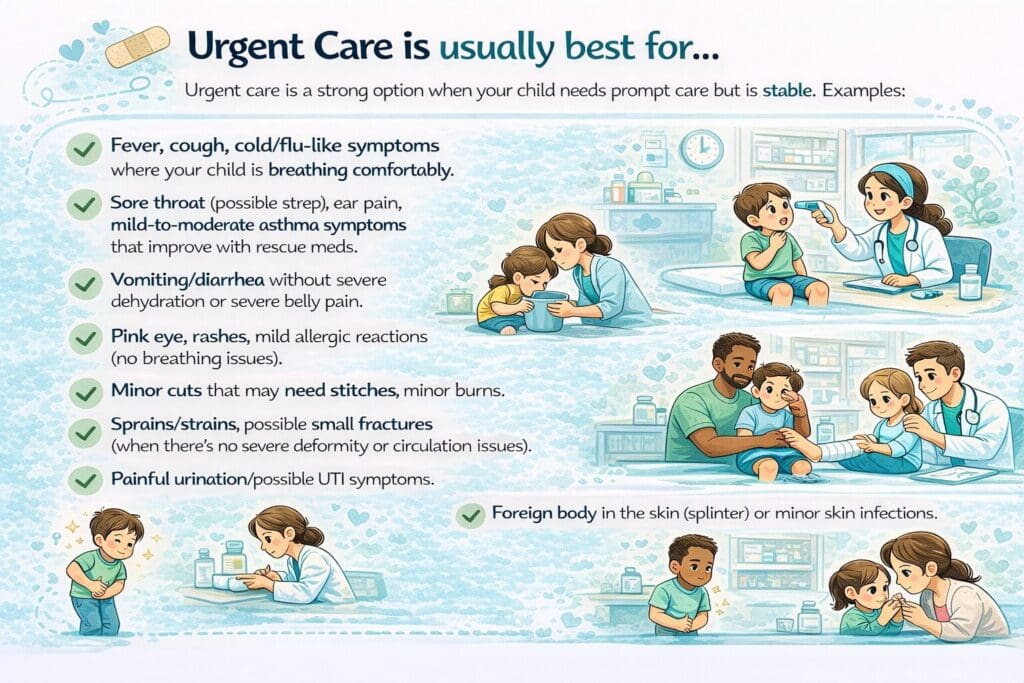
Why parents choose urgent care: Urgent care is a go-to option when you need your child seen the same day but your pediatrician is fully booked. Many urgent care clinics can also provide on-site testing, like rapid strep, flu, or COVID tests, and may offer X-rays, which can speed up answers and treatment decisions. It’s also especially helpful during evenings and weekends when your pediatrician’s office is closed, so you’re not forced to wait until the next business day.
Your Pediatrician is best for… Your child’s pediatrician should be your home base for routine and long-term care, including well visits, vaccines, and growth and developmental check-ins. They’re also the best fit for ongoing or recurring concerns, like asthma management plans, eczema, constipation, and repeated ear infections, because they can follow patterns over time and adjust care as your child grows. Pediatricians are ideal for behavior and sleep concerns, school-related issues, anxiety, and ADHD evaluations, and they’re a great choice when symptoms are mild, improving, and safe to wait for an appointment. They should also handle follow-ups after urgent care or ER visits to make sure your child is recovering well and to coordinate next steps if anything needs closer monitoring. Why it matters: your pediatrician knows your child’s history, tracks progress across multiple visits, and can coordinate referrals to specialists when needed.
Common scenarios (where to go)
1) Ear pain + low fever
- Usually urgent care or pediatrician (same/next day).
- ER only if severe swelling behind the ear, stiff neck, extreme lethargy, or severe dehydration.
2) Sore throat + fever
- Urgent care or pediatrician for strep testing and guidance.
- ER if trouble breathing, drooling with inability to swallow, or signs of dehydration.
3) Asthma/wheezing
- Urgent care if mild–moderate and improving with rescue inhaler.
- ER if your child is struggling to breathe, can’t speak in full sentences (age-appropriate), lips look bluish, or rescue meds aren’t helping.
4) Cut on the face
- Urgent care is often ideal, especially if it needs stitches and it’s within a few hours of the injury.
- ER if bleeding won’t stop, the wound is deep with visible fat/muscle, or there’s concern for a head injury.
5) Head bump after a fall
- Urgent care if your child is acting normal and symptoms are mild.
- ER for loss of consciousness, repeated vomiting, worsening headache, confusion, seizure, or very abnormal sleepiness.
If you’re stuck between urgent care and the ER, choose the safer option—especially for breathing problems, dehydration, head injuries, or very young infants. And if you’re deciding between urgent care and the pediatrician, urgent care makes sense when you can’t get a timely appointment or symptoms are worsening.
For same-day urgent care in Winchester, come to 2118 Pleasant Valley Road, Winchester, VA 22601, or call (540) 545-9999 and we’ll help you decide whether you should come in or use a virtual visit.
CATEGORY
2/22/2026